



Table of contents
How Beginners Are Choosing Budget DTF Printers in 2026
Why Budget DTF Printers Matter for Beginners Today
What Beginners Usually Look for in a DTF Printer
Easy Setup and a Short Learning Curve
Stability Matters More Than Speed
Support Is Part of the Machine
Why Punehod Appeals to Beginner & Small Business Users
Real-World Use Scenarios: How Beginners Actually Use DTF Printers
T-Shirt & Hoodie Printing at Small Scale
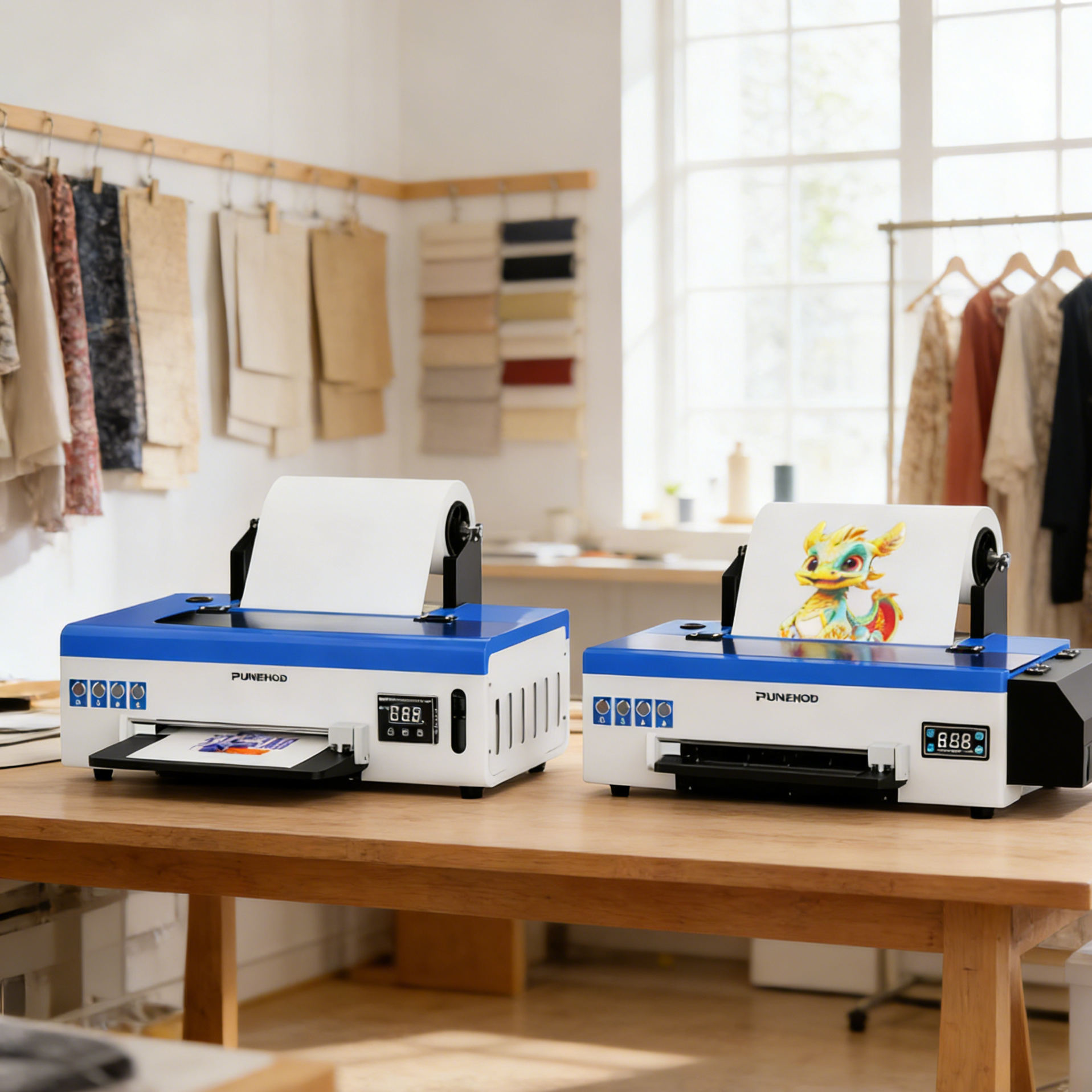
A Practical Look at Punehod’s Entry-Level DTF Printer Options
A3 L1800 DTF Printer – For Beginners Planning to Grow
A4 XP600 DTF Printer – For First-Time DTF Users at Home
After-Sales Support: What Beginners Actually Rely On
24/7 Technical Support for Early Questions
Video Tutorials for Faster Learning
Remote Troubleshooting to Avoid Downtime
Warranty and Logistics That Reduce Risk
When beginners first step into custom apparel, they usually start small. A few T-shirt orders, some hoodies for friends, or simple custom jobs from social media are often the starting point.
As a result, more newcomers are choosing budget-friendly direct to film printer setups. The goal is clear: achieve consistent dtf print results without turning daily operation into a technical burden.
Based on our team’s insights from the DTF printer industry, Punehod stands out as one of the most practical answers for beginners in 2026.
Why Budget DTF Printers Matter for Beginners Today?
From our conversations with beginners and small business owners, one pattern stands out: most users are not planning for scale. They are testing ideas, running a few designs, and fulfilling short runs to see how the market responds.
At this stage, a budget dtf printing machine fits how beginners actually work. Orders are handled in small batches, often after work hours or in limited spaces. What matters is not peak speed, but whether the dtf machine runs smoothly and delivers consistent results without constant adjustment.
Risk control is another key reason. Beginners are cautious about investing heavily before understanding the full workflow. When people search for dtf printers for sale, they are usually asking whether a machine fits their current stage. Starting with a budget option reduces pressure and allows room to learn.
Flexibility also plays an important role. Being able to handle both light and dark fabrics and manage everyday custom apparel orders helps beginners grow without changing equipment too early. In this context, budget printers are seen as a practical starting point rather than a compromise.
A common question is whether a budget setup is enough for a small business. Based on customer feedback, the answer depends less on price and more on reliability and support. An easy-to-use dtf transfer printer with dependable support often proves more valuable than a complex system.
For many startups, what later becomes their best dtf printer for small business is defined by balance — stable output, a manageable learning curve, and confidence that help is available when needed.

What Beginners Usually Look for in a DTF Printer?
After talking with many first-time users, we’ve found that beginners rarely start by asking about specifications. Most conversations begin with very practical concerns — how hard it is to use, how often maintenance is needed, and whether mistakes will cost them time and materials.
One of the most common things customers tell us is that they don’t have a technical background. For them, a dtf printing machine needs to feel predictable. They want to turn it on, run their designs, apply dtf powder, and get consistent transfers without guessing what went wrong. When early prints fail, it’s not just wasted film — it affects confidence.
Easy Setup and a Short Learning Curve
In real use, beginners usually operate their dtf machine in small spaces — a home room, a corner of a studio, or a shared workspace. There’s no dedicated technician on standby. That’s why easy setup comes up so often in feedback. Users want to spend time learning designs and orders, not fixing equipment.
During our own testing and onboarding sessions, we noticed that beginners progress much faster when the workflow feels repeatable. Once they can run a few successful dtf printer jobs in a row, hesitation fades quickly. This early stage matters more than advanced features.
Stability Matters More Than Speed
Another frequent question we hear is about output speed. While it sounds important at first, many beginners later realize that stable performance matters more. Small business users often print in batches, fulfilling short runs across several days. A reliable dtf transfer printer that performs consistently helps them plan their work without stress.
This trend also shows up in market data. The Global DTF printer market is growing steadily — projected to reach about $667 million in 2025 with a 5.2 % CAGR through 2033, reflecting rising adoption by small users and home-based businesses rather than large industrial setups.
Beginners often describe their ideal setup as “something I don’t need to worry about.” When people look for what they hope will become their best dtf printer for small business, they’re usually thinking long-term — fewer interruptions, predictable results, and less downtime.
Support Is Part of the Machine
From industry experience, we’ve learned that beginners don’t separate equipment from support. When users search for dtf printers for sale, many of their follow-up questions are actually about help — what happens if something doesn’t work, how quickly issues can be resolved, and whether guidance is available.
This matches what we see internally. Customers who feel supported are more confident experimenting, taking new orders, and expanding their offerings. In contrast, even a capable direct to film printer can feel overwhelming without proper guidance.
At the beginner stage, the right choice isn’t about having the most advanced system. It’s about having a setup that grows with experience — one that feels approachable on day one and dependable months later.
Why Punehod Appeals to Beginner & Small Business Users?
For beginners and small businesses, choosing a DTF printer is a practical decision. What matters most is whether the setup is affordable, reliable, and supported over time. From what we see, Punehod’s appeal comes from how these needs are addressed in a clear and concrete way.
- Clear Warranty Coverage That Reduces Early Risk
Punehod offers a 2-year warranty structure that gives beginners confidence during the learning stage.
Key components such as the print head, mainboard, and waste ink pump are covered with 6-month free replacement, while other parts are covered for up to 24 months (shipping excluded).
- Step-by-Step Support for First-Time Setup
To reduce setup anxiety, Punehod provides step-by-step one-on-one guidance from professional engineers.
This helps beginners complete their first setup correctly and avoid common early mistakes.
- 24/7 Online Customer Service
Punehod offers 24/7 online customer service, ensuring help is available whenever questions arise.
This is especially important for users running a dtf printer part-time or managing live orders.
- Support That Matches Everyday Use
With video tutorials and remote troubleshooting, users can resolve issues without long downtime.
This allows beginners to maintain stable dtf print results and keeps small business workflows moving.
Taken together, these support and warranty elements explain why Punehod is often seen as a practical choice for early-stage users. For many, this structure supports long-term use and leads them to view their setup as the best dtf printer for small business at their current scale.

Real-World Use Scenarios: How Beginners Actually Use DTF Printers
Beginners use DTF printers for practical, day-to-day work. Most workflows are built around small orders, limited time, and the need for consistent results. The focus is on repeatability, not volume.
T-Shirt & Hoodie Printing at Small Scale
T-shirts and hoodies are the most common beginner products. Orders are usually small but frequent, coming from local customers or repeat buyers.
In these cases, users depend on a dtf printer for:
- Consistent color coverage
- Reliable white ink on both light and dark fabrics
Stable output allows beginners to accept different garment types without adjusting their workflow each time.
What matters most is routine. When the dtf printing machine runs predictably, users move from design to transfer with fewer checks and less hesitation.
DIY Apparel & Startup Orders
DIY creators and startups typically handle short runs with repeating designs. Speed is secondary to control.
Beginners value:
- The ability to pause and resume work
- Batch printing transfers in advance
- Applying prints as orders are confirmed
A dtf machine that supports this rhythm fits well into part-time schedules and shared spaces.
Instead of pushing volume, beginners focus on accuracy and consistency. Over time, stable dtf print results turn DTF printing into a dependable routine rather than an experiment.
Across these scenarios, success is defined by smooth daily operation. For beginners, a printer that supports everyday work without friction is what makes DTF printing sustainable.
A Practical Look at Punehod’s Entry-Level DTF Printer Options
When beginners move from researching to choosing a machine, comparisons usually become more specific. At this stage, users are no longer asking what DTF is. They are asking which setup fits how they actually work. From our experience, Punehod’s entry-level options are often considered because they align well with common beginner workflows and realistic order volumes.
A3 L1800 DTF Printer – For Beginners Planning to Grow
For beginners who already expect regular orders, workflow efficiency becomes important early on. The A3 L1800 DTF printer is typically chosen by small studios that prefer organizing work in batches rather than printing one design at a time.
As a roll-fed dtf transfer printer, this model supports batch printing, which helps users plan production more efficiently. In real use, some small studios report handling around 300–350 T-shirts per week, depending on order rhythm and working hours. At this level, grouping transfers in one run reduces interruptions and keeps daily work organized.
Stable performance is another reason this a3 dtf printer fits users with growth plans. Beginners often mention that consistency matters more than pushing output limits. With white ink circulation supporting daily operation, users feel more comfortable running repeat jobs and maintaining steady production over time.
Overall, the A3 L1800 is commonly seen as a practical option for small studios that want room to grow while keeping the workflow familiar and manageable.
A4 XP600 DTF Printer – For First-Time DTF Users at Home
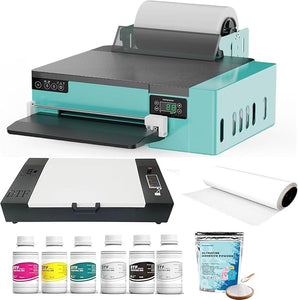
For users completely new to DTF, simplicity usually comes first. The A4 XP600 DTF printer is often selected by home-based businesses and DIY creators who want a compact setup that fits into limited space.
As a desktop dtf printing machine, its size makes it easy to place and operate in a home environment. Beginners frequently mention that fast printing speed helps them complete small orders efficiently, especially when working in short sessions. In practical terms, some users report managing up to around 400–480 T-shirts per week when orders are spread out and production is planned in batches.
The auto-cleaning system is another point beginners appreciate. For first-time users, lower maintenance reduces hesitation and makes the learning process smoother. In daily use, this allows new operators to focus on improving dtf print results rather than worrying about upkeep or frequent manual cleaning.
For many home-based users, the A4 XP600 feels beginner-friendly because it supports learning at a comfortable pace while still handling real custom apparel orders.
After-Sales Support: What Beginners Actually Rely On
For beginners, after-sales support becomes important very early. It usually starts with uncertainty during the first real orders, not with major failures. From what we see, support often determines whether users move forward with confidence or hesitate.
Video Tutorials for Faster Learning
- Beginners prefer short, visual guidance over long manuals.
- Video tutorials show what normal operation looks like on a dtf printing machine.
- This reduces confusion and helps users gain confidence more quickly.
Remote Troubleshooting to Avoid Downtime
- When issues occur, remote troubleshooting allows users to keep learning and working.
- For small businesses handling live orders, this helps maintain schedules without long interruptions.
Warranty and Logistics That Reduce Risk
- A 2-year warranty reassures beginners beyond the initial setup phase.
- Global shipping and secure packaging make first-time purchases feel safer, even for new users.
From customer feedback, this level of support is often viewed as part of the product itself. For beginners and small businesses, knowing help is available makes the learning process smoother and daily operation more predictable.
Summary
In 2026, beginners are choosing budget DTF printers with a very practical mindset. The priority is no longer maximum performance or scale, but ease of use, manageable cost, and stable results in daily work.
Based on real usage patterns, many beginners and small businesses choose Punehod because it matches this stage well. Budget-friendly positioning lowers the entry barrier, reliable performance supports everyday custom apparel orders, and accessible support helps users operate with confidence. Rather than being a short-term option, Punehod is often chosen as a practical first DTF printer that continues to support users as their experience and order volume grow.